Uri Peleg
Natural Connection
About Me…
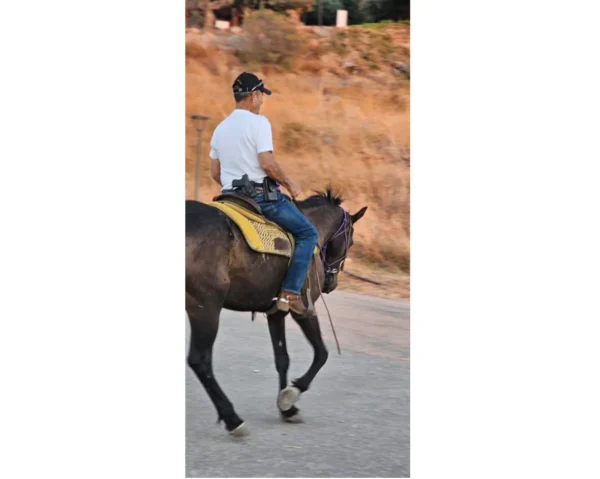
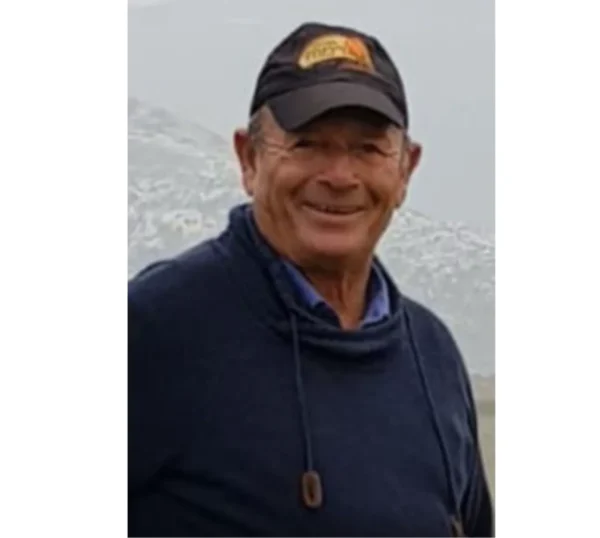
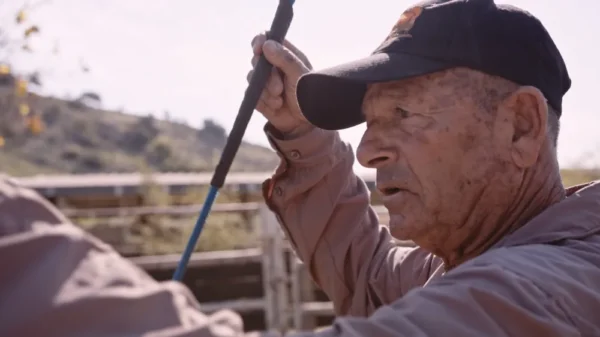
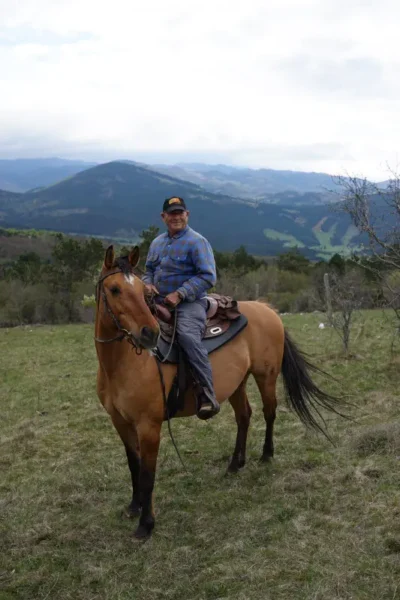
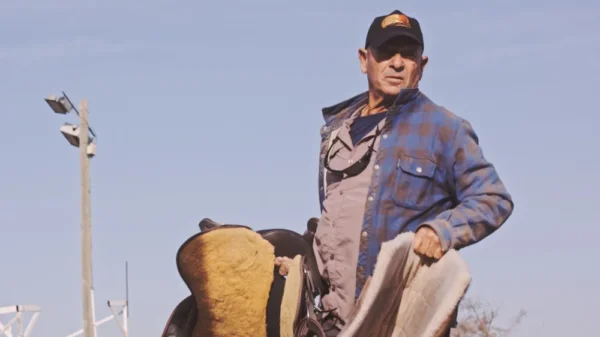
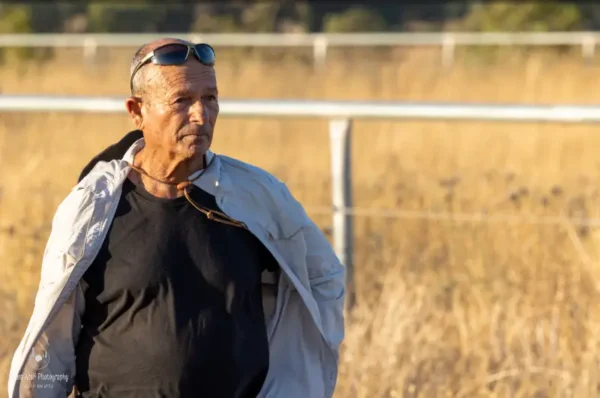
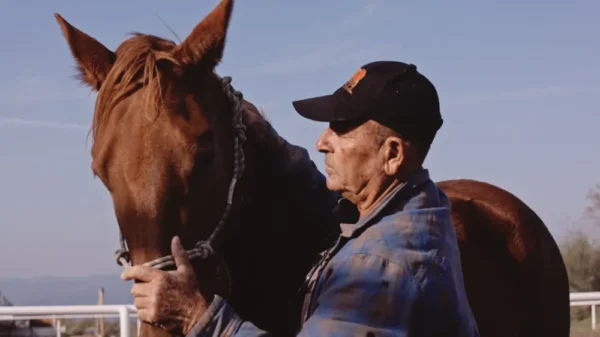
I am Uri Peleg, a horseman for over 50 years. My journey began in Moshav Ramot in the Golan Heights, where I raised my first mare, Natasha, and went out with her to graze with a small herd of dairy heifers in the pasturelands surrounding the young moshav of Ramot.
That is where my long journey with horses began—filled with hard work and many challenges, but also many questions, incredible surprises, and great satisfaction. I intuitively understood that everything is connected to communication between us, human beings (the predators), and them, the horses (the prey animals). And the responsibility for communication and understanding lies with us.
It all started when I was a small child in the sleepy moshav of Sdeh Dov in the Lower Galilee, in the scorching summers of the 1950s, when they would take us by truck to bathe in the Sea of Galilee. The image of this “sea,” with the Russian songs (in Hebrew) of that time playing in the background, and the history surrounding it, never left me.
When I finished my military service in 1970 and heard about the Moshav Movement’s intention to establish a new settlement in the Golan near the Sea of Galilee, it was already clear to me where I was headed. In the new moshav we drew lots for houses and plots. I drew a location from which there was no chance of seeing even a glimpse of my childhood dream—the Sea of Galilee.
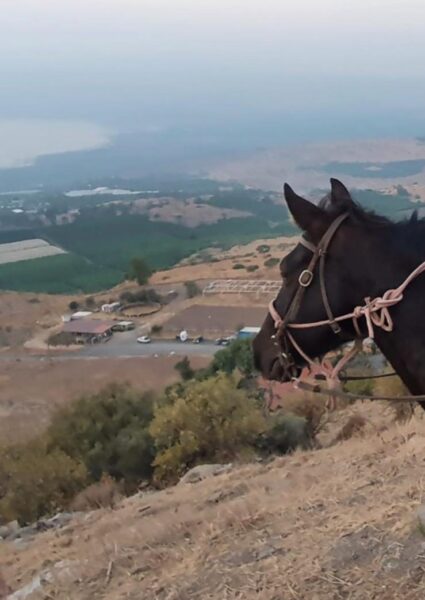
I searched for a place and arrived at a spot (about 2 km above Moshav Ramot) adjacent to Har Laviya / Laviya Complex (a site from the Early Bronze Age). There, I felt and knew that if I did not build my home and live there, I would betray my life.
In the early 1980s, the Ramot Hotel was built, and they offered me to lead horseback riding tours in the area. At the time, I still didn’t have an organized horse ranch, so I roamed with the herd through various spots around and inside the moshav, until 1980, when we finally settled at the Ramot Ranch, which I built on Mount Laviya (near the Laviya site, an Early Bronze Age site). The place included staff housing — and indeed, I was the staff.
It’s important for me to point out that establishing the ranch would not have been possible without the significant help of Nechama Peleg, of blessed memory, the mother of my daughters Michal and Ofer, and of Justine Leon, the mother of my children Zoe and Tom. By the way, all my children were born on the mountain.
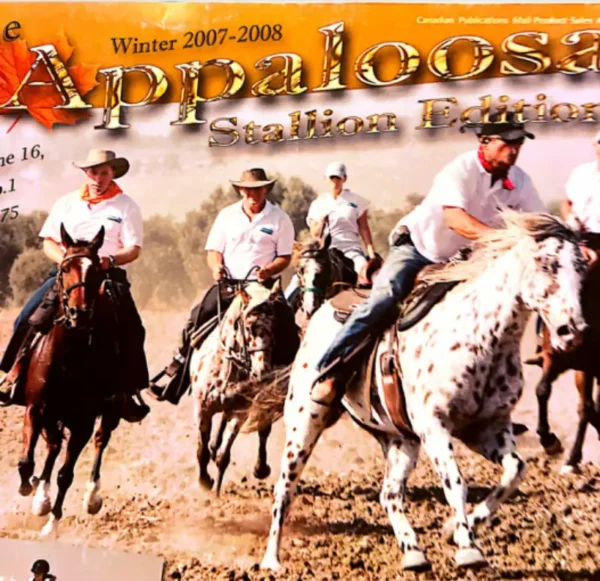
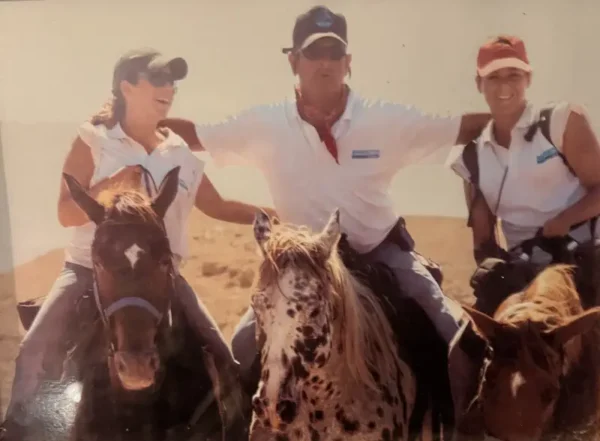
One day, in the early 1980s, Yehuda Avni, of blessed memory — who in my eyes was a model of vision and leadership — approached me to establish a horse ranch on a hill above the Sea of Galilee (Vered Hagalil). He asked me to come as an instructor and help him lead a three-day riding tour with a group of American riders. That’s where the first connection was made with Bill, nicknamed “Wild Bill” (William) Silverman, from Los Angeles. Bill, who truly was wild, but also a warm, proud Jew and a businessman at heart, approached me during the ride and asked if he were to bring horses to Israel, which breed I would recommend. I immediately said — an Indian horse, professionally known as an Appaloosa.
Then, after a few months, the unbelievable happened — an invitation and a plane ticket arrived, and there I was in California, selecting eight purebred Appaloosa mares and one Appaloosa stallion. The mares were bred to Quarter Horses (Appaloosa is an open breed, allowing breeding with Quarter, Thoroughbred, or Arabian stallions, as long as the mother is a colored Appaloosa, or alternatively, the father is a colored Appaloosa stallion breeding a Quarter, Arabian, or Thoroughbred mare).
In 1986 they arrived in Israel by air, and I brought them into the new stable I had built on the mountain. And then it began to “get cloudy” in paradise. The Americans, being businessmen at their core, demanded that I raise the Appaloosas in stables, meaning with purchased feed (alfalfa hay and supplements when needed). I understood that if I were to keep the mares the way they required — I would collapse financially, since the natural grazing land I had in abundance at the time, spread over hundreds of dunams, was a solid foundation for saving on feed costs, while also giving the horses constant movement, a way to release excess energy, and mental well-being — for them and for me.
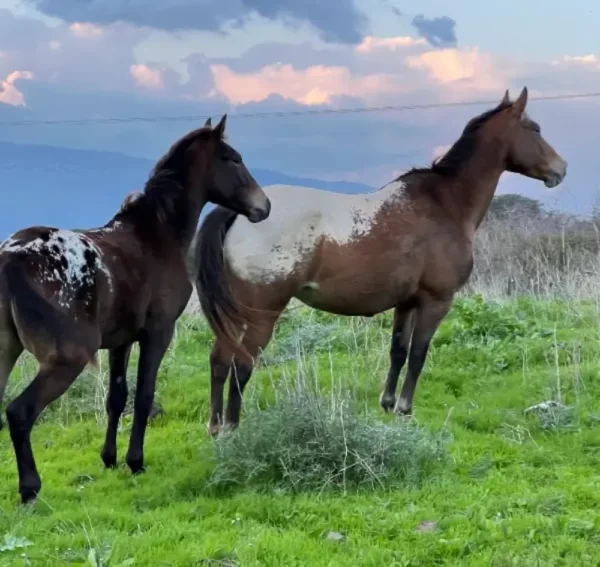
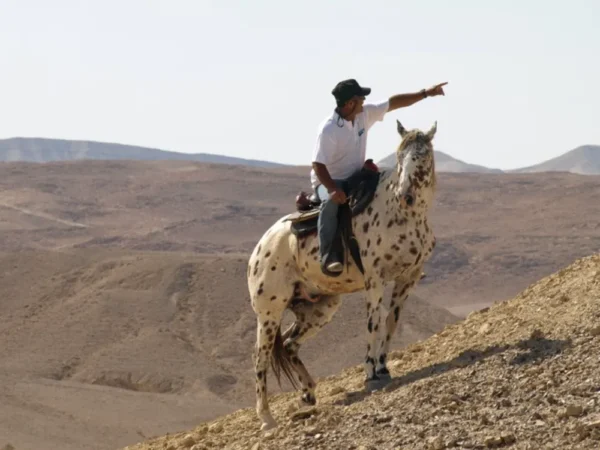
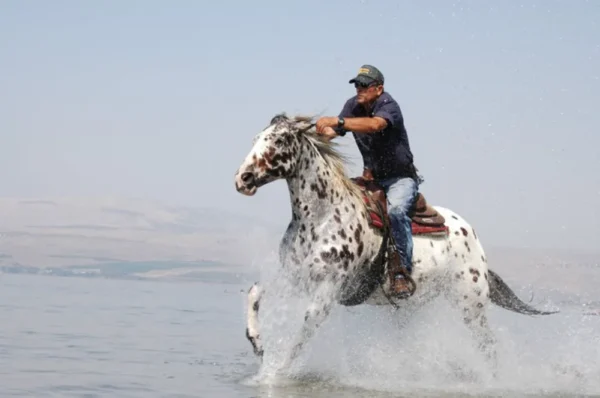
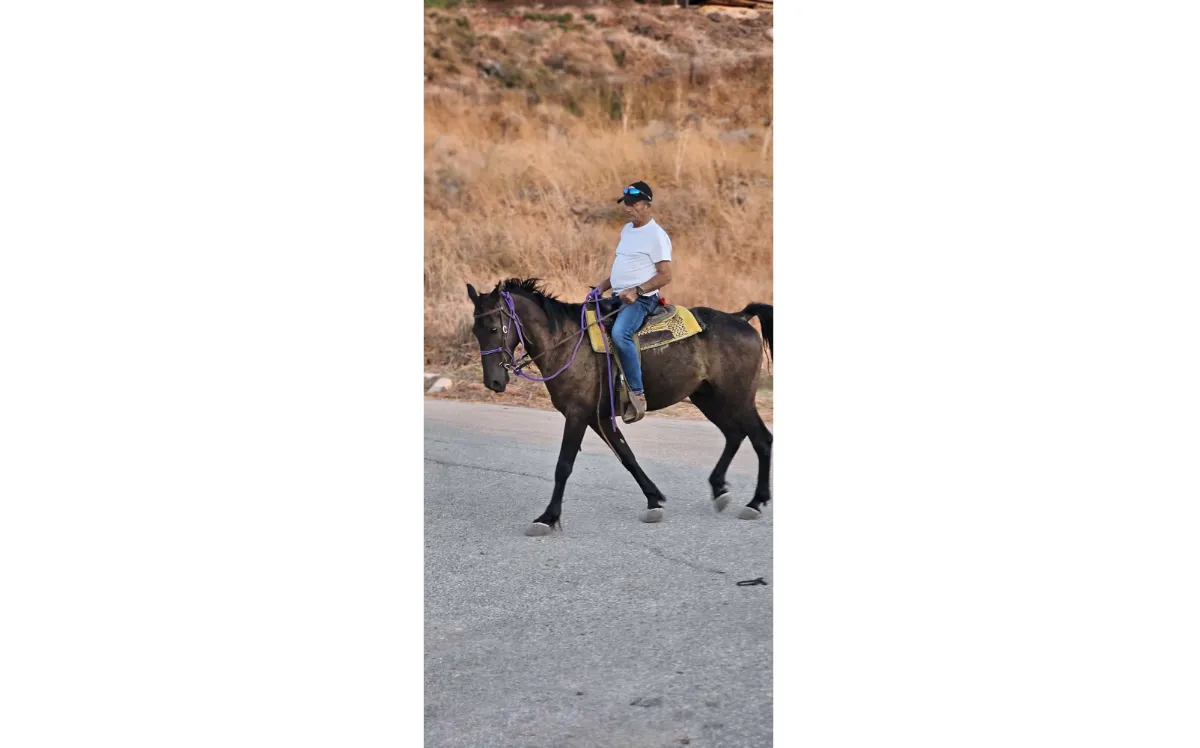
We dissolved the deal, and I was left with one mare (Pumpkin), a young colt named Golan, and two fillies (Sherry and Mati). From this nucleus I built the Appaloosa herd and the Appaloosa crosses I ride to this day, including Appaloosa horses crossed with gaited horses — what is known today as Walkaloosa.
I was the owner of a horse ranch, alone in the Golan, trying with all my strength to legally establish and approve the ranch on the mountain. But professionally, I found myself in a “desert,” despite the professional clinics I participated in — most of which (except the clinics of Art Gayton in the late ’80s and early ’90s) did not work on the essential techniques of horsemanship, and were based mainly on improving competitive technical skills. There, I did not find answers to the real problems I encountered, such as: how to truly get a horse to move in the direction I intended, even when his head is turned but his legs are going somewhere else; how to deal with the horse’s fears; refusal to stop; bolting; refusal to move forward; rearing; preventing bucking; or how the horse copes with perceived threats.
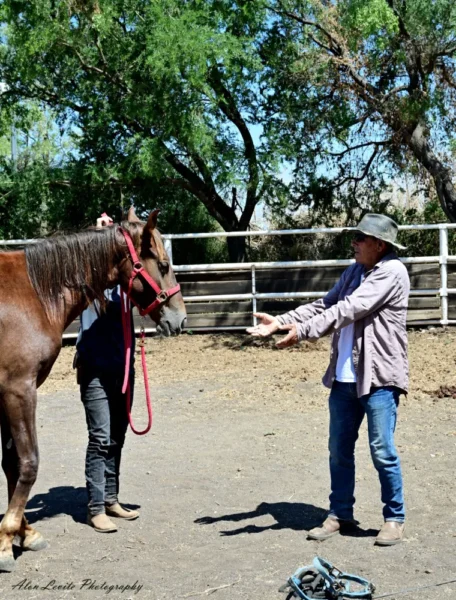
As a response to many of these issues, I developed a unique method I called Natural Connection, based on deep attention to the horse’s skeletal structure, the horse’s understanding of what is being asked of him, his body language, his physical and emotional makeup, and the way he understands us — and how we can communicate with him in the best way. And mainly, it provides solutions to the most critical safety issues a rider may face.
Of course, I’m not the first or the last to develop insights in this field. But the method I offer has a unique character. It is a technique suited for horses at low and medium training levels, but it can also be applied to highly trained horses. The technique is entirely built on the flex (push-bend) of the horse’s ribcage, an action that gives him a position…
Naturally, allowing him to perform a turn toward the desired direction with relative ease. That is why this technique was named “Natural Connection.”
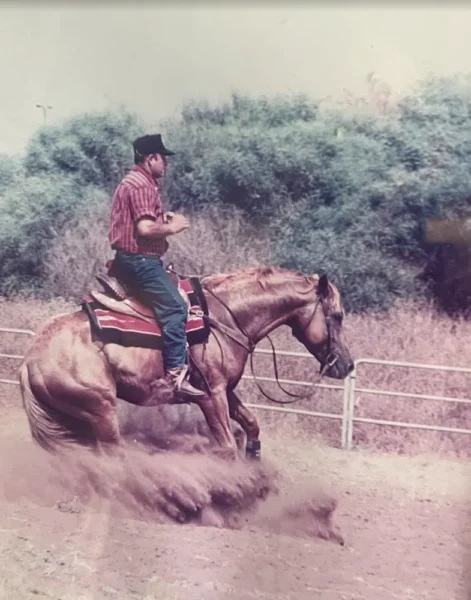
Once I understood the essence of my insight, a fire burned within me to show everyone — all horse people and all horse lovers — this tremendous understanding. So, in the early 1990s, I called this highly significant exercise rein-forcing — compelling the horse to move with his shoulders following his head, using this precise technique. Today I call it Natural Connection, because it uses the horse’s natural structure to enable or better understand what is being asked. This exercise/technique proved to be extremely significant in countless situations we encounter as riders and trainers.
I also took “Golan” (a horse I had trained to a high level using this technique) to a Trail Class competition (an earlier and simpler version of what we now call Extreme Cowboy Race) and demonstrated the technique’s ability to enable the horse I trained to successfully complete all the obstacles. I rode Golan — and with the ranch team — we crossed the country from end to end while I rode using only the Natural Connection technique, without a bit, without reins, a halter, a rope around the neck, or any auxiliary equipment at all. (I did something similar with the horse “Shon” in 2007 with friends, riding him with no equipment whatsoever on his head or neck.)
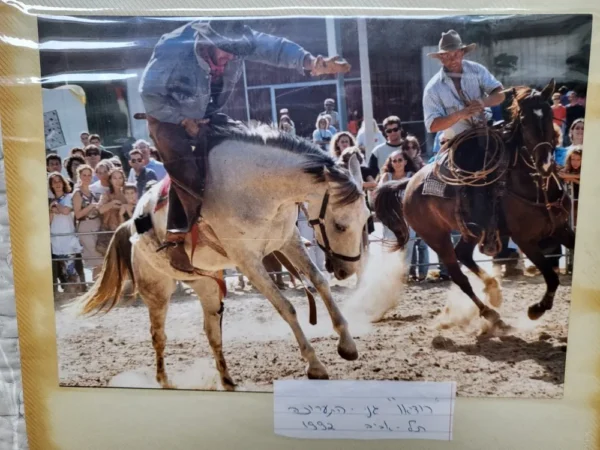
In the 1990s, I did everything I could to make a living in this tough field — raising horses and teaching communication, training, and riding. The fire burned in me to demonstrate the Natural Connection technique (then I called it Rein-Forcing) and to showcase the riding skills of riders from the Golan. That’s when I founded “Another 5 Minutes… — Ramot Rodeo.”
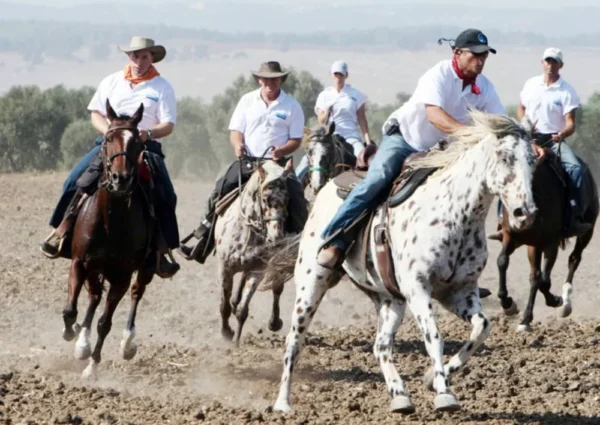
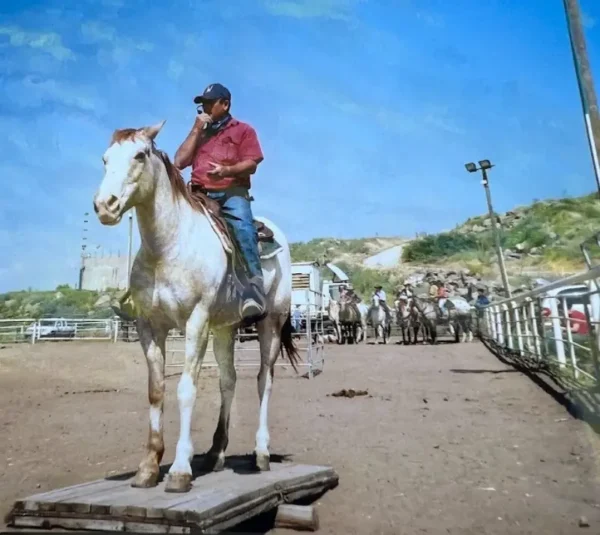
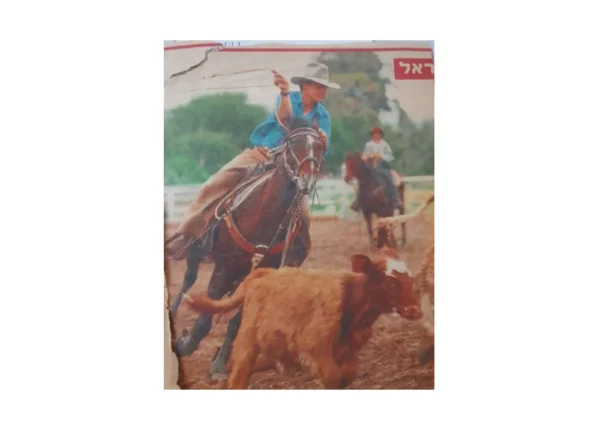
The rodeo operated for a limited period, both at the ranch and as a traveling show that included calf roping, penning, and speed competitions by the professional team.
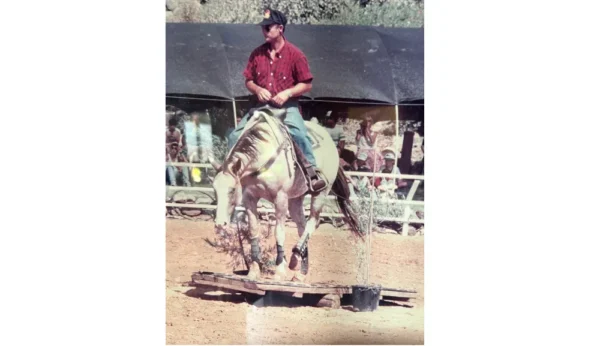
They were indeed professionals (and out of fear I might forget someone, I won’t mention names — but these were some of the leading horse people in the country). It was exciting, and even included riding a good-natured cow, who, when we tightened the strap (flank strap), bucked in the rodeo just as her name suggested — “Krizz.” And of course, me on Golan, demonstrating communication with horses.
Today, it’s clear to me that in terms of professional demonstration of the theory behind the Natural Connection technique — crossing the country on two different horses without reins, and the reinless performances in the Ramot Rodeo — these were major professional achievements. But educationally, and in terms of applying the Natural Connection technique to everyday riding, it is clear that we absolutely (!!) need reins for corrections and emergencies.
In 1994, I was certified as a western riding instructor and as a recreational riding instructor by the American Riding Instructors Certification Program (ARICP).
I realized I would not be able to make a living from a riding ranch in the Golan (while at the same time establishing a horse ranch on the mountain — Mount Laviya — with everything that entailed), and that I needed to find work with horses in the central region.
So I began teaching at the Wingate Institute for Physical Education and Sports. I was recommended by an instructor at the college, Shaul Ziv, of blessed memory (who had also previously been the commander of Shayetet 13). Thus, from 1990 to 2017, I managed the training and riding center of the Wingate Institute, where I certified many hundreds of students as riding instructors, and after the Sports Law came into effect — as certified riding coaches.
I found myself driving every week — once or twice a week — transporting 13 horses by truck to Wingate and teaching riding and the relevant courses with them. After a few years, I joined my soul-friend Gilad Ben David, owner of the “Rokhvim BaTeva” ranch in Sde Hemed. I sold him part of the horses and traveled there (this time by private car) to conduct the courses with those horses. We continued together for many long years, until I finished my work with the Wingate College of Physical Education in 2017.
In the instructor courses I taught, I mainly followed the curriculum of the federation and the Sports Authority. It’s clear to me that some of what was taught contradicts what I teach today, because those are competitive techniques that “don’t hold water” (such as neck reining, rein handling, and quite a few other exercises). After the Sports Law came into effect, it’s worth noting that after a legal battle I conducted against the federation and the Sports Authority (who prevented my entry into the coaching course), I joined the federation’s coaching course, through which I was also certified as a coach by them.
In 2020 (during the peak of COVID), I sent a request to an impressive woman who had crossed the United States twice, along with many trail rides in countless states across the U.S., asking her to choose three horses for me according to a test I would send her. This test measures reaction-speed learning (the distance between conditioning and response). Videos of this test appear here on the site in the video section. Gillian (that’s the woman’s name) chose three horses for me: Nick, a Quarter Horse I nicknamed “Nick the Sausage”; another Quarter Horse with excellent results on the test; and Čechta — whom I named Shechta — a Mustang mare (captured from a wild herd in California); and Miot, a strong Paint.
I was planning to cross the United States, and of course I chose to train Nick the Sausage, who excelled in the reaction-speed tests I sent. I flew in 2020 with the goal of training Nick to the most advanced version of the Natural Connection technique — a riding version (which I use only for demonstrations in the arena), based solely on body language with minimal use of voice and legs/spurs.
Nick absorbed the material at lightning speed (indeed, the tests proved their worth), and I found myself riding in a magical area called “Topanga,” a wild natural region adjacent to Los Angeles. On one of the rides, I stepped on something (perhaps a squirrel hole or something else), the horse leapt into the air, threw me off, and I landed on my head and ribs. I was apparently dragged (as I lost consciousness briefly), and the next thing I remember was the knock-knock of the stable manager who evacuated me to a helicopter that flew me to a hospital in L.A. I was released after three days with stitches in my head, a few broken ribs, and a crushed ego.
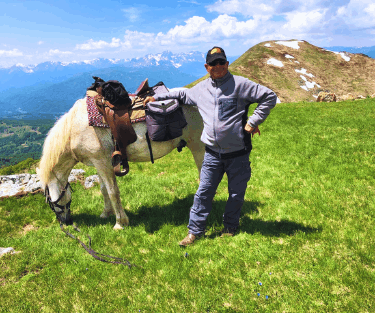
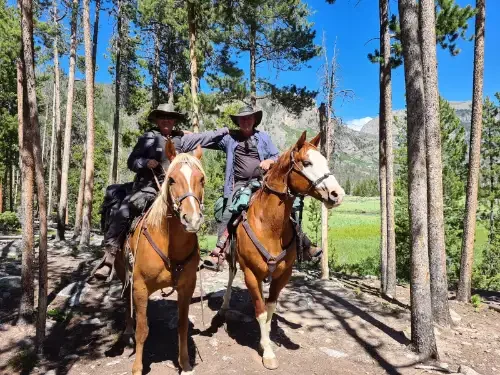
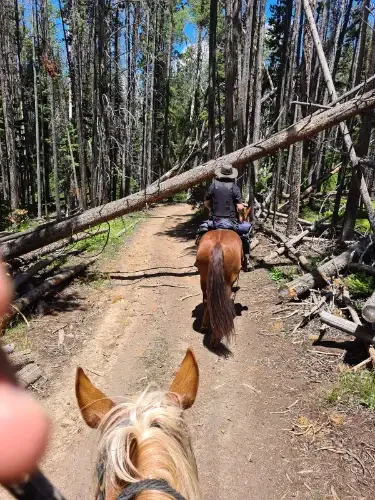
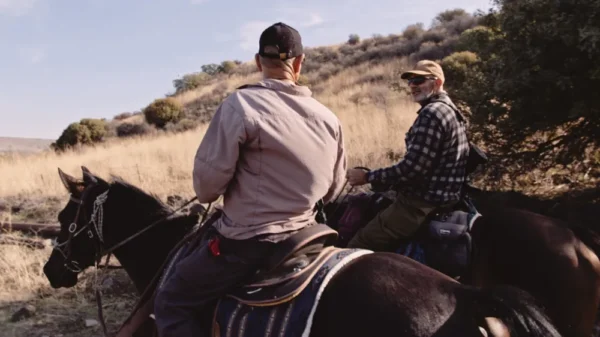
I decided to try to fulfill part of the dream. I called my soul-friend — Gilad Ben David from the ranch in Sde Hemed — who was originally supposed to cross the United States with me, and asked him to come and see what we could salvage from our plans in my condition. Gilad arrived, we did a short riding test, and I realized that somehow, I could still ride. In the meantime, it turned out that because of COVID, the planned route (the PCT — Pacific Crest Trail) in California was closed. We drove to Wyoming and then to Colorado to try to complete at least part of the main trail crossing the United States (the CDT — Continental Divide Trail).
After riding for about two particularly beautiful weeks, we returned to Israel.
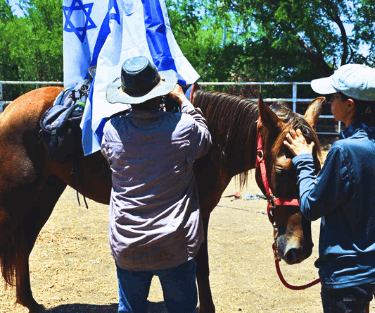
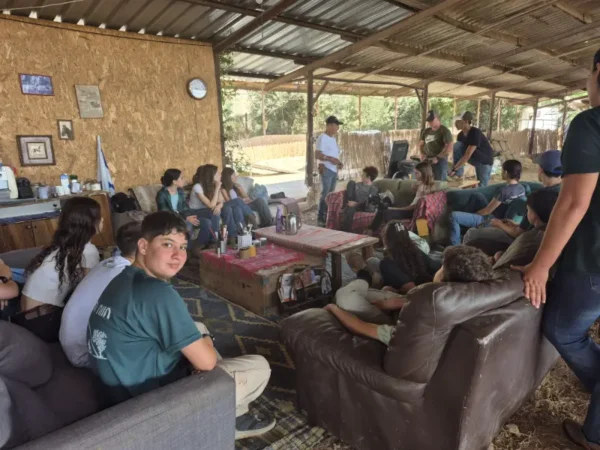
Since 2021, I have been holding sessions for groups of PTSD survivors, combining their meetings with trail riding,
and since 2023 we have been part of the “Atalef” organization, which took on the responsibility for this work.
Got a question? I'm here for you!
Leave your details and I will get back to you as soon as possible
