The courses of Uri Peleg
The personal connection…
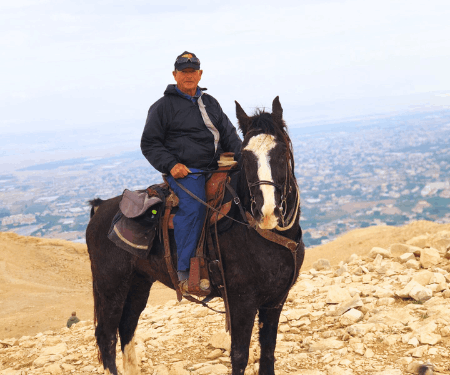
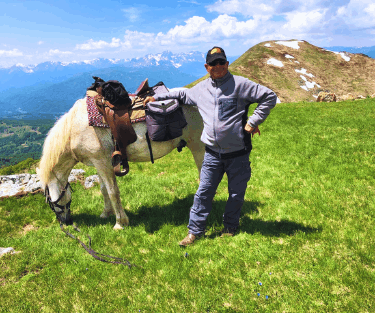
Over the years, I have worked with thousands of riders and horses of all kinds — from teenagers dreaming of mounting a horse for the first time, to private horse owners, to experienced trainers and instructors. I also met riders coping with fears, traumas, or disabilities, and I discovered that with listening, patience, and personal adaptation — anyone can find their own way into this connection.
Before every course, an introductory ride takes place — not to test, but to understand. It’s an opportunity to truly listen: to see where we’re starting from, how to build a process that fits exactly the person in front of me, and what needs to happen for the rider and the horse to begin speaking the same language.
Now there is a variety of practical courses for those who want to deepen their connection with the horse, understand it better, and ride through cooperation — and through control.
There is also an option for half-day or one-to-two-day workshops at your ranch.
Course Selection
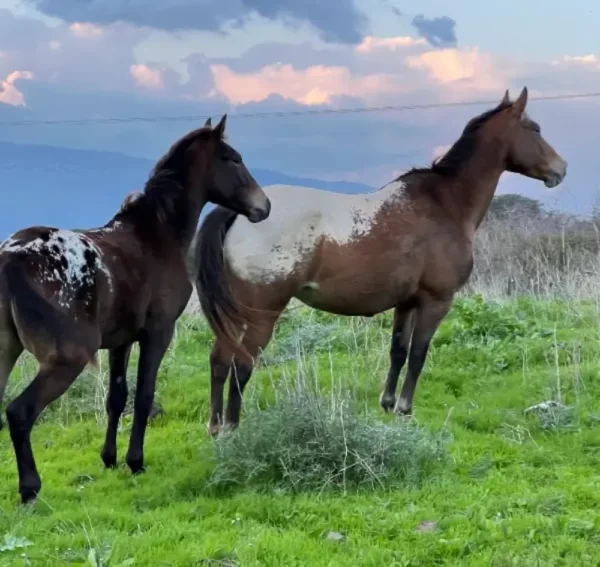
Course: “Halter Training for Young Foals”
(Young horses that are not yet ridden)
Also known as halter training.
Topics covered…
Training the foal to accept the halter and be caught, leading, tying, lunging, simulating weight and human presence on a nursing foal, and everything required for proper handling of a young foal (from birth up to about two years).
Course: “Basic Training and the First Mount”
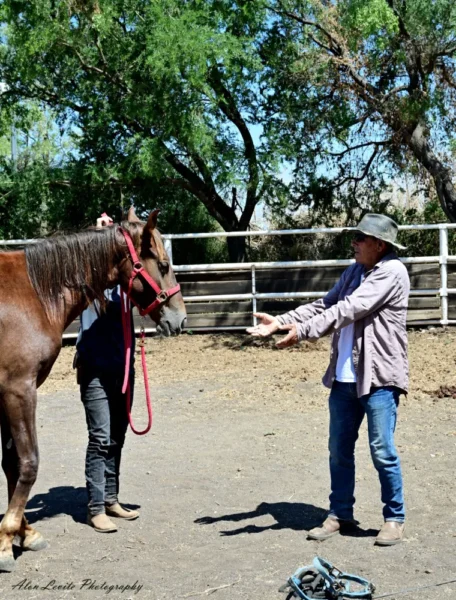
This course includes over 40 steps leading to the first mount and progressing toward free, clear riding for the horse in its basic training — in the round pen, in the arena, and on the trail.
Topics covered…
- Training to be caught and accept the halter, leading from the side, from the front, turning left, turning right
- Learning inner tying
- Learning lunging in a round pen
- Learning to touch all parts of the body from a distance with a long whip
- Learning close touching
- Learning to flap a sack over the horse’s body
- Leading from the front, and when the sack is flapping, leading backward
- Leading forward while the sack is flapping
- Cinch simulation
- Touching with a folded blanket
- Introducing the saddle
- Placing the blanket
- Placing the saddle with girth simulation (cinch)
- Final tightening of the saddle and going out to lunge
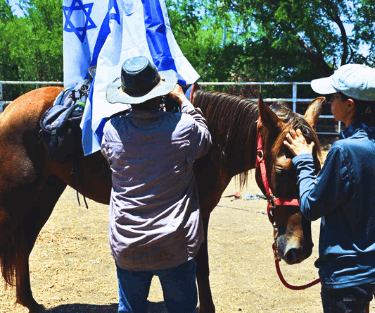
- Tying flags to the saddle during lunging to simulate rider presence
- Flapping a sack over the saddle and leading the horse backward
- Flapping a sack and leading forward, stopping, and leading backward
- Handler stops; rider jumps from afar — small jumps and one big jump
- Rider approaches with small jumps and one big jump
- Handler turns the horse to the other side
- Jumps from the other side
- Small jumps with one foot in the stirrup and one big jump
- Turning the horse and doing small jumps with one foot in the stirrup and one big jump
- Rider folds the leg and swings it over the horse to the other side
- Rider holds a rope simulating reins
- Handler leads the horse backward while the rider pulls the rope or reins backward
- Handler walks forward and the rider asks the horse to move forward
- Transferring the cue from handler to rider — first the handler, then the rider, then both together, voice cue and movement. Finally, rider first and handler after
- Handler moves away from the horse from the front and eventually disconnects the lead rope
- Handler moves to the center and becomes the lunger, helping the rider if the horse “gets stuck”
- If the horse is energetic, we will work with long reins and finally with a bit during the first rides
- If the horse is passive, we will work with the halter and a pair of reins attached to both sides
- After the horse walks and trots (jog or trot), we can begin figure-eights and changes of direction in the round pen
- After one or two days of riding, another friendly horse may be brought into the round pen, and then both horses can move to the arena
- We can then begin leaving the arena and going out to the trail with another friendly horse
- The first canter will always be uphill and against the direction of the stable
- Whenever riding with another experienced horse, the technique is: the experienced horse leads, the young horse follows, then gradually both go side by side, and finally the young one leads
- Whenever there is a fear issue or new terrain, the experienced horse leads
- It is recommended to accustom the horse in lunging to both round pen and rope, and of course to aids such as saddle bags with a water bottle on each side, to expose it to the shake of bottles and prevent future bucking
- Very important: From the very first moment, it is highly recommended to use Natural Connection — the natural connection — in bending right and left, stopping, and backing up. This will greatly help the horse understand what is being asked
- For bending — leg (on the ribcage), hand asking toward the hip, other hand toward the mane, and the outside leg pushing the shoulders in the “Charlie Chaplin position” to push the shoulders after the horse’s nose
- For stopping — legs forward, lean back, and if possible take one step back while leaning forward
Course: “Natural Connection”
Intended for learning this technique, and includes advanced training communication for this method and riding (mostly on the trail).
Topics covered…
- Riding and training using the Natural Connection technique
- The difference between competitive riding techniques and the Natural Connection technique
- Elementary horsemanship — the body language of the horse and of the rider/trainer accordingly
- Choosing the appropriate horse for riding, including basic training and equipment
- Considerations in choosing a riding route and the required riding techniques for uphill, downhill, water, and essential trail crossings
- Appropriate solutions for various situations in the field
- Safety solutions for bucking, rearing, flight, fight, as well as issues of speed control
- Collection techniques
- Elementary horsemanship: catching, leading, working with a stud chain, tying, loading (trailer), and if time permits — training for hobbles, ground-tie, tailing, fitting Easyboots, etc
- Reasons for working on the lunge line, mini-lunge, round pen lunging. Bits
Course: Certification for Trail-Riding and Outdoor-Riding Instructors
This course is not a substitute for the official certification courses of the Riding Federation under the supervision of the Sports Authority (which are based mainly on competitive-world techniques with an emphasis on aesthetics during execution). Rather, it uses Natural Connection — the natural connection — to perform what is required in real trail conditions.
This course is unique in Israel, as it teaches participants how to lead trail rides where most riders are beginners (!!) — a situation that demands specific professional expertise.
The course is also recognized by major insurance companies in Israel (such as Ihud Hakla’i, Hachsharat HaYishuv, Menora, etc.).
Topics covered…
- Elementary horsemanship — the body language of the horse and the trainer accordingly
- Choosing the client
- A phone call for expectation-setting with the client (number of riders, requested date, age, weight, type of ride, rider level, price, deposit)
- Protective helmets, insurance signatures
- Matching riders to horses
- Demonstration (seated), hand simulation, leg simulation, practice, and departure for the ride
- Choosing the appropriate horse, including basic training and basic equipment (saddle bags, etc.), choosing the route and the required riding techniques for uphill, downhill, water, necessary trail crossings, road, and the appropriate solutions for the various situations encountered on the trail
- Learning and practicing Natural Connection for maximum control of the horse during riding
- Safety solutions for bucking, rearing, flight, fight, as well as speed-control issues
- Collection techniques
- Elementary horsemanship: catching, leading, working with a stud chain, tying, loading (trailer), hobbles, tailing, twitch, Easy Boot fitting, and more
- Reasons for lunging, mini-lunging, round-pen lunging, bits
- Basic instructional lessons for clients; insurance; communication; assistant-guide responsibilities; and emergency veterinary knowledge required for all horse owners
Private riding-lesson course during an off-road trail ride
Intended for beginner riders, skilled riders, riding instructors, trainers, and anyone who feels like trying.
It is essentially an educational trail-riding tour in off-road conditions, including most of the Natural Connection course content.
combined course
It is possible to participate
in a combined course:
N. Connection (training communication and riding)
combined with a course for certification of riding tour instructors.
Topics covered…
The subjects of study combine the study topics of both courses.
Questions and Answers
Who are the courses suitable for?
Some of the courses offered by Uri Peleg are also suitable for beginners with no prior horseback riding experience, and some are suitable for advanced riders, riding instructors, trainers, and riders with previous experience. The courses are built individually according to the participant’s level, and they are private, from a single participant up to a maximum of 2 participants.
What is special about the Natural Connection method?
The Natural Connection method, according to my approach, is based on a deep understanding of the horse’s body language, natural communication, and consideration of its physical and emotional structure. It is applied in every horse-training or horseback-riding course he teaches — making each course an experience of connection, not just learning.
What is the difference between regular riding and the Natural Connection method you offer?
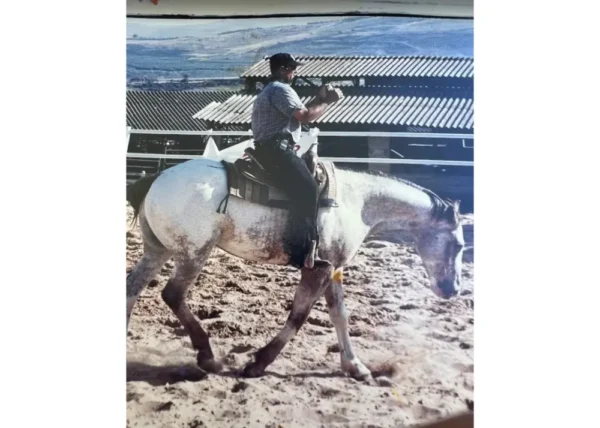
Almost the entire world of Western riding relies on competitive techniques between the rider and the horse. These techniques, especially in style competitions, are based on performing the exercise aesthetically, under arena conditions. But techniques do not provide a real solution for what is required from the rider out in the field.
For example:
The neck-reining steering technique is aesthetic, but in conditions where the horse connects to its instinct (for example, bolting from fear) it is unable to handle the horse’s fears and turn him in order to keep the rider safe.
For example, a simple stop in style competitions teaches students to sit upright, and if the horse in the field runs toward the stable — the rider will be pulled forward and try to stay on the horse by gripping with the legs (which will accelerate the horse instead of stopping him).
For example, all the leg positioning for controlling the horse in competitive English and Western disciplines is designed to create an aesthetic appearance, but not a functional one when dealing with steering problems in the field, where the horse connects to instincts of fear, herd attraction, stable attraction, etc.
A Western rider in style competitions, for instance, will never use the inside leg pressing on the middle of the ribcage (unless he wants the horse to move forward and sideways — a two-track or side pass), compared to what is required here, which is using the inside leg on the center of the ribcage for a sharp turn in that direction.
A dressage rider (artistic riding) will bend the horse at the front part of the ribcage, with the other leg maintaining the rounding of the pelvis along the arc of the turn, without the ability to push the horse’s shoulders after its head in the turn — according to competition requirements, of course.
Not to mention the hand-and-rein steering technique in both styles, based on “neck reining.”
Can I participate in the course with my own horse?
Yes. In most of my courses you can participate with your personal horse. It’s an opportunity to work on horse training based on the familiarity that already exists, and to strengthen the connection and understanding between you — through the Natural Connection approach.
How do you register for the courses?
Registration is done by coordinating with me personally, Uri Peleg, by phone or WhatsApp. After the initial contact, a meeting will be scheduled for expectations alignment, which includes a quiet 10-minute ride. After that, a short introduction call will take place, so we can understand together which course is suitable and coordinate the dates and style of work
Where are the courses held?
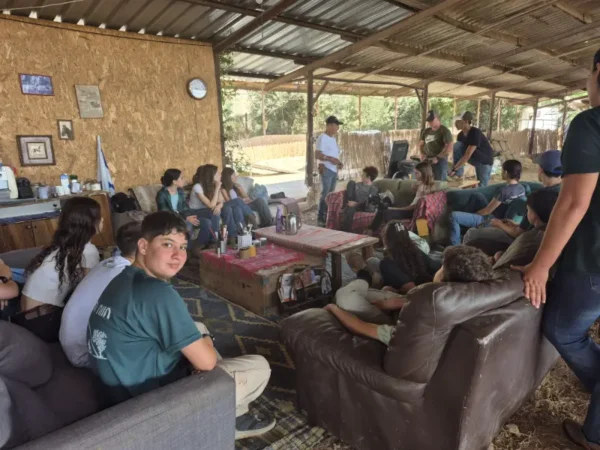
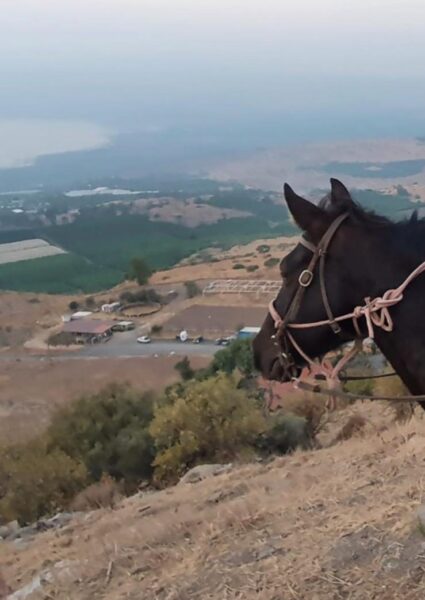
The courses — Natural Connection and the certification course for trail-riding instructors — take place at Ramot Ranch in the Golan Heights, in the heart of an open, wild, and beautiful area. It’s not just a place for learning — it’s an inseparable part of practicing the technique.
The learning takes place outdoors, in natural terrain. Ramot is the place where this technique was born and developed, and it can be felt in every lesson, every ride, and every step along the way.
It is possible to coordinate for Uri to come teach the rider at their residence or at the location where they keep their personal horse, depending on needs, field conditions, and what suits both the horse and the process.
Got a question? I'm here for you!
Leave your details and I will get back to you as soon as possible
