Natural Connection – Natural Bond
This technique is essential and works excellently (!) on every horse, even if not trained for it, starting from the most basic training level. Clearly, the more we persist in using the correct codes of this technique, the horse will naturally become trained to it, up to the highest levels of work with body language alone, using minimal reins and bit for steering, based solely on pushing the ribcage.
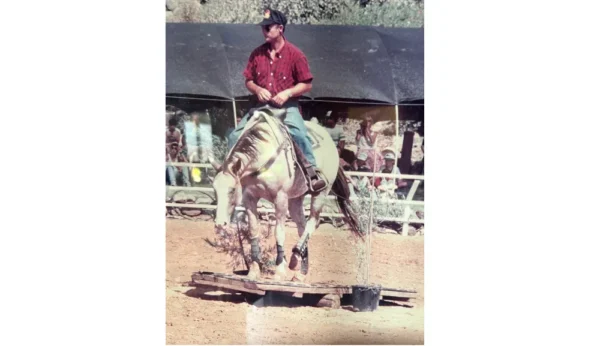
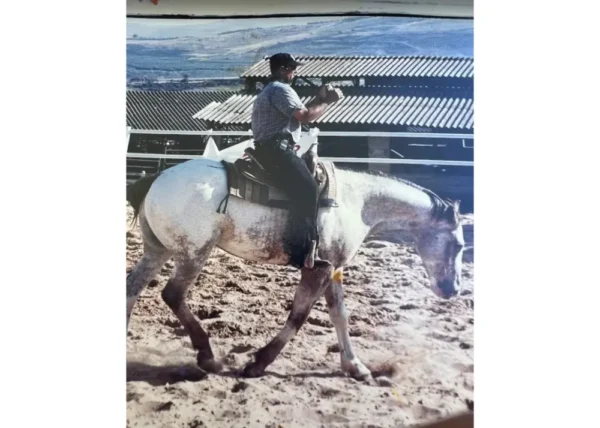
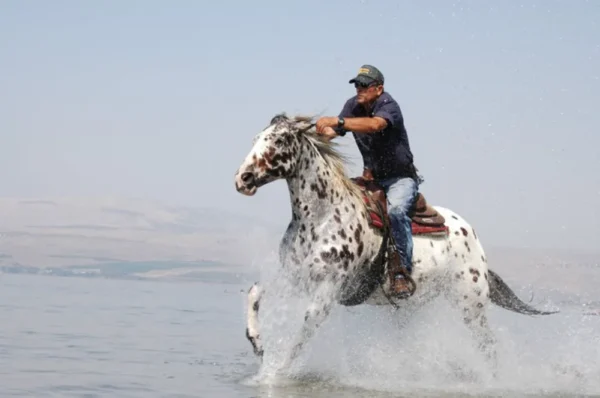
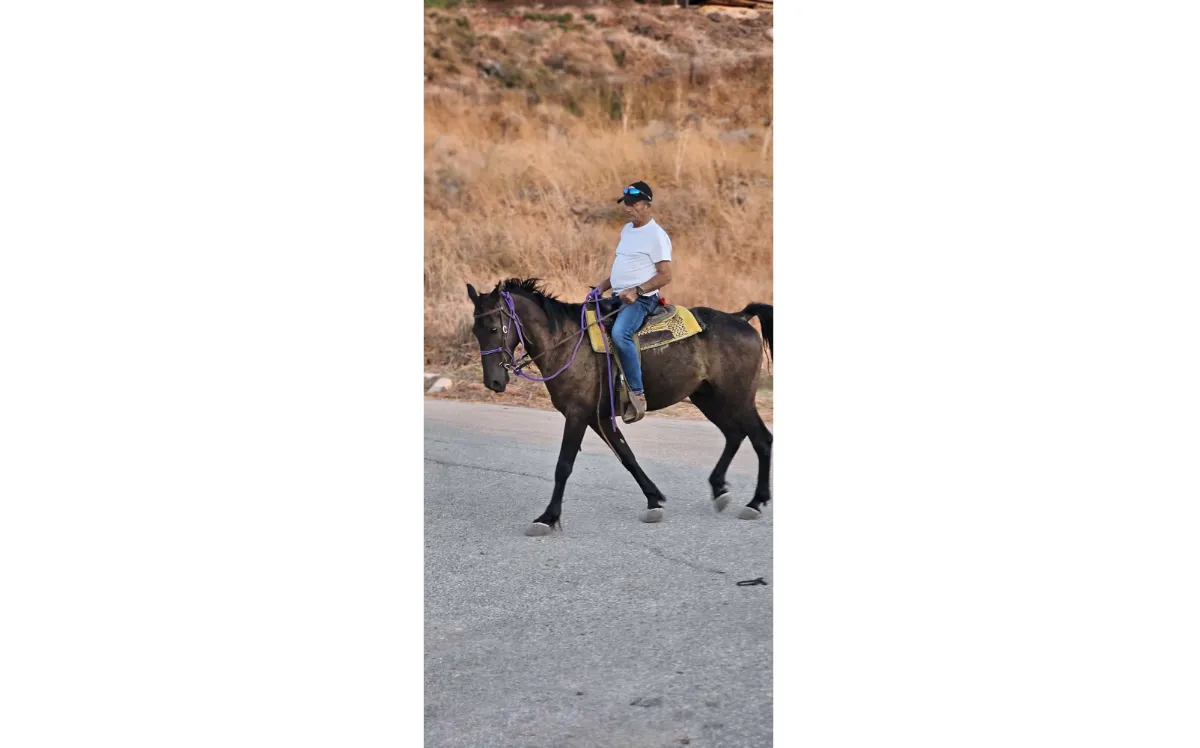
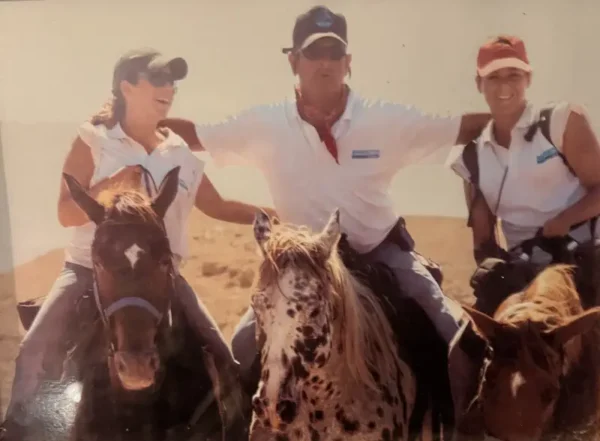
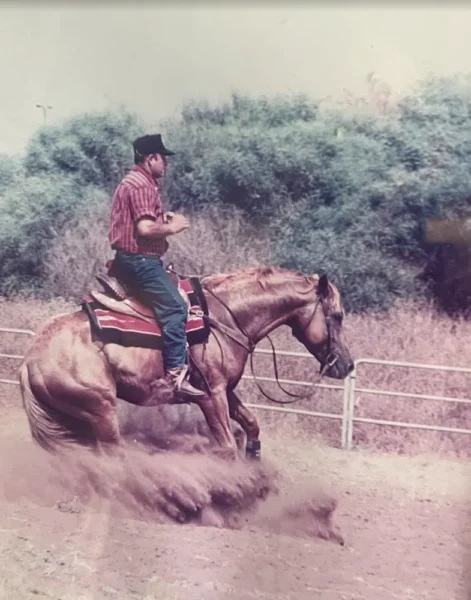
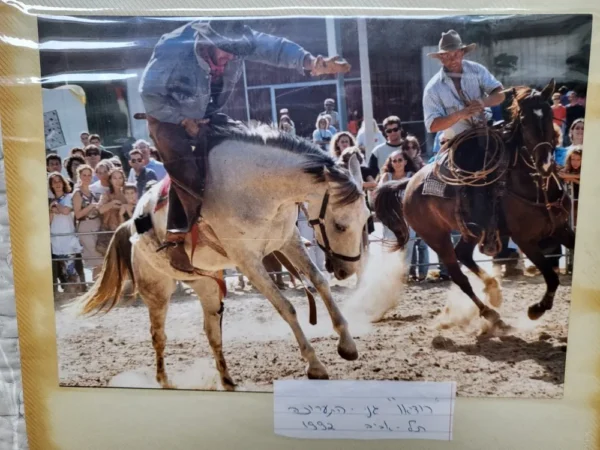
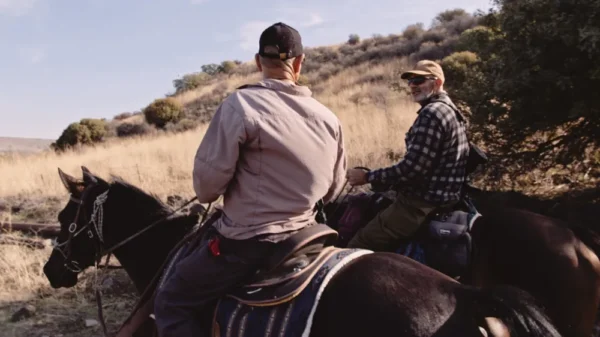
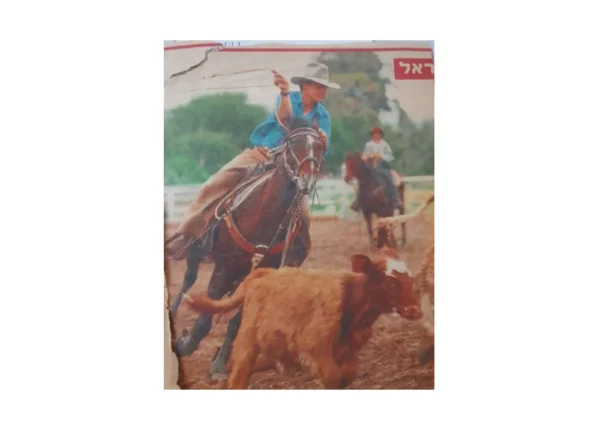
I gained a reputation as a trainer who rides without reins. The fact that sometimes, in shows and demonstrations (for those who remember “Ramot Rodeo” — a show that took place at Ramot Ranch and across the country in the 1990s), I removed the reins while performing obstacle-transition exercises using body language, sounds, and guiding the horse with my legs — and not through the delicate tissues of his mouth. Also, the fact that I crossed the country twice (with ranch staff and friends) on two different horses (Golan and Shon), all without reins, gave me the image of a rider without bit and reins.
And here it’s important for me to emphasize — in my opinion, it is forbidden to ride on the trail without a bit and reins. The bit and reins are extremely important for corrections and especially for safety. And it is perfectly fine if a rider skilled in the technique removes the reins or bit for a professional demonstration in the arena — of course only on a safe horse trained for it. And remember, Natural Connection is an effective technique with correct body language and intelligent use of the reins — even for horses with low training levels.
This technique naturally rounds the horse and “informs him” where we intend to turn, and even more, forces the horse to move after the direction of his head thanks to the pushing of his shoulders (which determine his direction of travel). I’ve seen drawings of bridleless riding (a type of Natural Connection, drawings from about 1,000 years ago) of warriors galloping with the reins lying on the horse’s neck, shooting arrows backward at the enemy chasing them.
Art Gayton, a trainer from the U.S. who introduced the foundations of horsemanship in our country in the 1980s (and I don’t think there’s a single horseman in Israel who attended his clinics who would disagree), also rode in the arena using a type of Natural Connection (based on a technique different from mine) and showed us a video of an old Native American named Carl Helms riding this way in the 1950s and 60s… smoking and riding… smoking and riding…
What I do that is unique compared to other approaches is that in order to control the horse’s shoulder steering well, I must take advantage of the flexibility of the ribcage, and apply the code that pushes it to the opposite side, and then immediately push the shoulders at the front part of the ribcage (near the girth area) with the opposite leg in a position I call the “Charlie Chaplin position.” This unique steering allows better control over the steering of the shoulders after the horse’s head.
Meaning, unlike the Western world, for example, where we sometimes use pushing from the center of the ribcage to send the horse into a side-pass to the opposite direction, or a two-track to the opposite direction, or unlike the dressage world, which does not round the horse from the center of the ribcage but from the front part, with the outside leg pushing/holding from behind to round the horse’s pelvis to maintain the arc line.
In Natural Connection, an important part of the work is with the inside leg pushing the ribcage at the center of the ribcage, allowing the outside leg to push the horse’s shoulders after the direction of the head to make him move where we asked. This technique prevents refusal to move forward, prevents rearing, prevents giving the head in one direction (neck reining) while the feet take us somewhere else, and prevents unwanted backward movement. It is useful against freezing, against fear, and against panic-driven bolting (flight).
And mainly!… it allows horses that have been ridden long enough with this technique to enjoy it, as it saves them unnecessary pulling on the delicate tissues of the mouth — and to perform what is required through the rider’s body language as I described earlier (leg pushing the ribcage, hand asking the head to turn in the desired direction while the other hand releases toward the mane, and the outside leg pushing the shoulders in the “Charlie Chaplin position” after the direction of the head).
And therefore, this is not only a training method and riding technique — it is an entire approach born from real life, from experience, self-learning, and complete mastery. The method enables the horse to understand, cooperate, and act from natural comfort and willingness, and mainly from the recognition that he must perform.
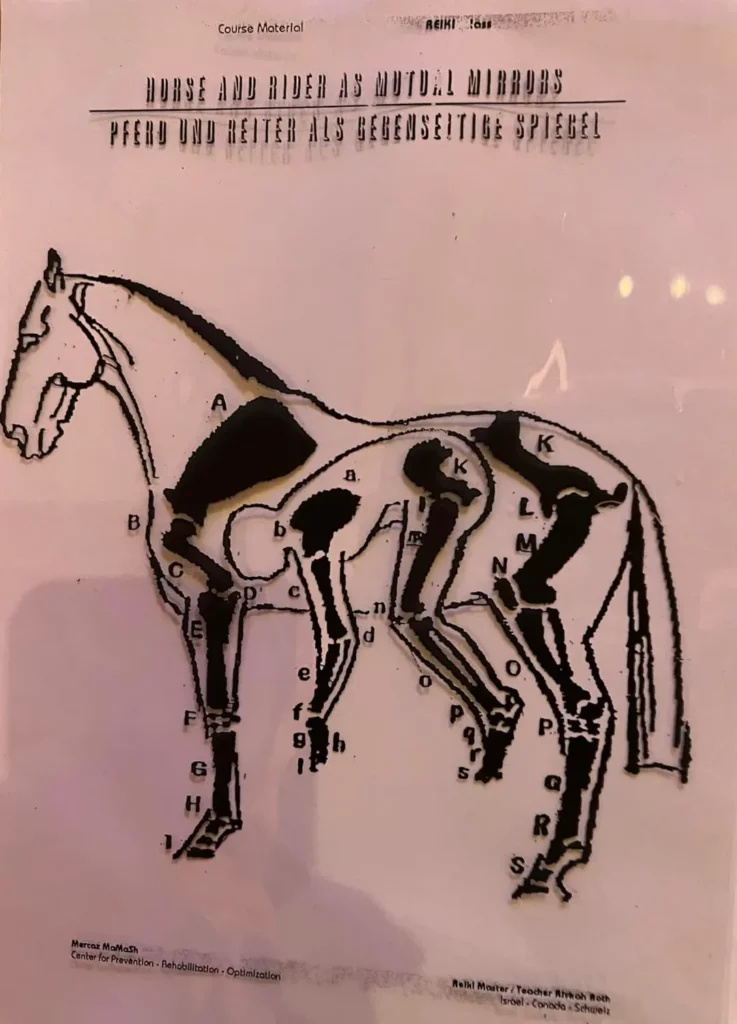
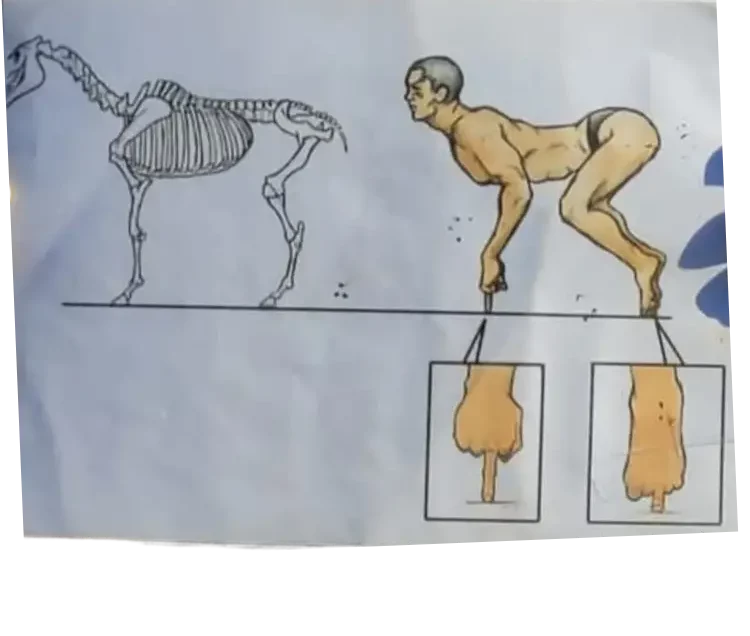
I developed the Natural Connection approach from life itself, through observing the horse’s skeletal structure, which is absolutely similar (with evolutionary differences) to the human skeleton.

Got a question? I'm here for you!
Leave your details and I will get back to you as soon as possible
