General
Main Menu
A Response to Unprofessional Criticism
The following video speaks for itself.
recommended and correct Two-Handed reins Control , vs. One-Hand Stop, In stressful situations
Identifying and Neutralizing a Threat
Here at www.uripeleg.org, and this time, a video about “matters of life and death”…
Identifying and neutralizing a threat — extremely important.
The Whole Truth About Competitive Techniques
Friends… from Uri Peleg, www.uripeleg.org.
This is a somewhat long video about a snapshot of the situation, and about extremely important recommendations regarding riding with two hands and proper leg position for trail riders, as opposed to competitive riders… English and Western riders, those arena riders, are bound by the traditions of English and Western riding and committed to them according to competition rules.
Remember — we have no reason not to need a different position for our legs and hands.
We are free from those traditions…
There is no need to hold with one hand…
Not in order to free one hand to catch calves, shoot Indians,
or behead heretics…
We need to ride in the safest way for us and in the clearest way for the horse.
Leave behind the traditions that dictate these techniques and are demonstrated in the competitive sector, in both English and Western riding.
These techniques “do not hold water” — meaning they will not stop a frightened horse, will not force it to turn exactly where intended, and will not prevent refusal, rearing, bolting, and so on.
Please listen carefully…
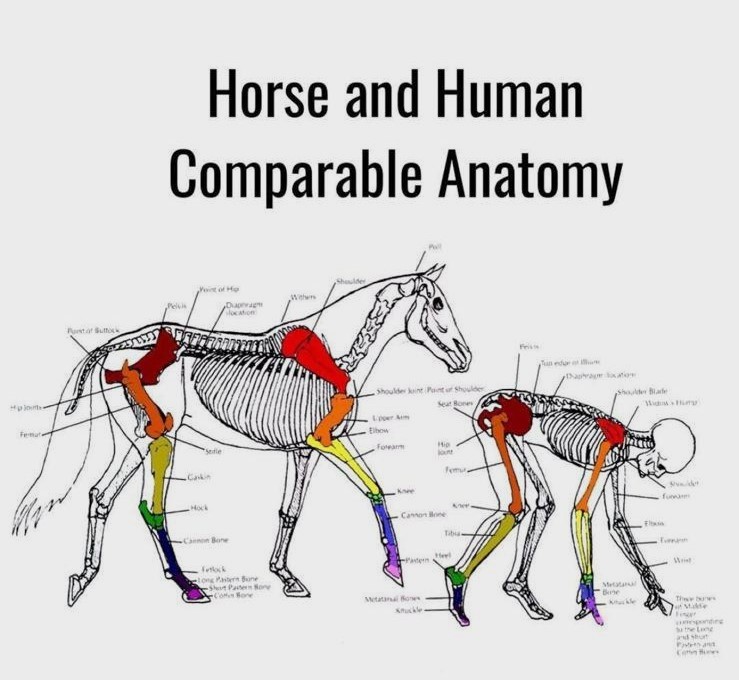
Human and Horse Diagram
A tribute ceremony by the trail riders for Art Gayton
Natural Connection in Riding – an article by Roby Hamershlag
Uri Peleg from Moshav Ramot is an unconventional person, and as such, his way of training horses is also very unconventional.
The Meaning of the Concept “Natural Connection” in Working with Post-Trauma Individuals Through Horses within the Atulaf Association
The space created between person and person, and between person and horse, is the essence of our project called Natural Connection. A group of 10 veterans, volunteers, and participants ride horses together in nature. Something happens during the ride, sitting under a tree, enjoying the scenery, and strengthening the bond between them. Ultimately, the group becomes a family. The Natural Connection Project is part of the “Rope Couple” project of the Atalef foundation. The project provides support to veterans struggling with PTSD. The group is divided into pairs, a veteran and a volunteer. These pairs will continue to support each other for years to come. The understanding that the trauma is not personal or familial, but rather a wound in the fabric of Israeli society as a whole, is a fundamental principle of the project. We all have a responsibility as a society to achieve healing and rehabilitation. This is for the sake of the unity and wholeness of the nation. In order to continue our activities for years to come, we need your support, especially during the complex and challenging times that the State of Israel is facing today. Key points: The project provides a unique opportunity for veterans to connect with nature, horses, and each other. The group setting creates a supportive and understanding environment. The project helps veterans to heal from PTSD and build stronger relationships. Your support is needed to continue the project and help more veterans. How you can help: Donate to the project. Volunteer your time. Spread the word about the project. Thank you for your support!
A Diagram That Taught Me the Structural Similarity Between the Horse and the Human as a Basis for Natural Connection
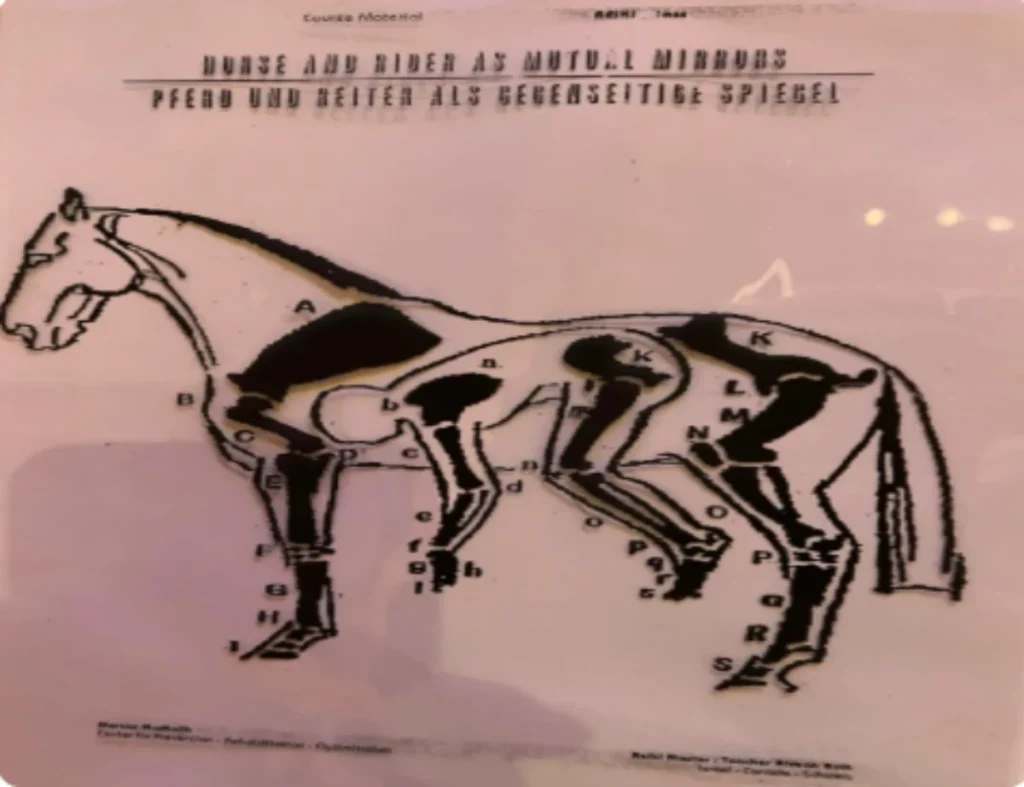
Ahead of the upcoming videos, some of which will deal with how we create a steering style that is characteristic and suitable for trail riding—as opposed to the steering commonly used in the competitive world—I am presenting here a diagram that has taught me a great deal about horses and their response to the points we press on different parts of their body in order to receive a desired reaction, in steering for example.
The steering I propose is steering with direct rein pulls, and consequently also the placement of the legs in positions different from those commonly used in the Western or English worlds, which will cause the horse to move its shoulders following its head in a turn or side movement, to the right or to the left. And this through our hands and our legs. (I will show this in the upcoming videos.)
This steering will solve countless problems that arise from steering using “neck reining” on the trail, in all its forms—a technique that is characteristic of and copied from the competitive riding arena.
As preparation for the next videos, I am publishing here a diagram of a human skeleton inside a horse, which has taught me so much about the absolute similarity between the horse’s responses to pressure points on its body and our own responses to identical pressure points on our bodies.
